Technical SEO
· 8 min read
HTTP 401 Error: Meaning, Causes & Fixes
See what an HTTP 401 error means, how it differs from 403 and how users or developers can fix authentication problems. Check the steps now.
Read article
See how local citations support Google Maps rankings, why NAP consistency matters and which listings deserve attention. Check the guide.
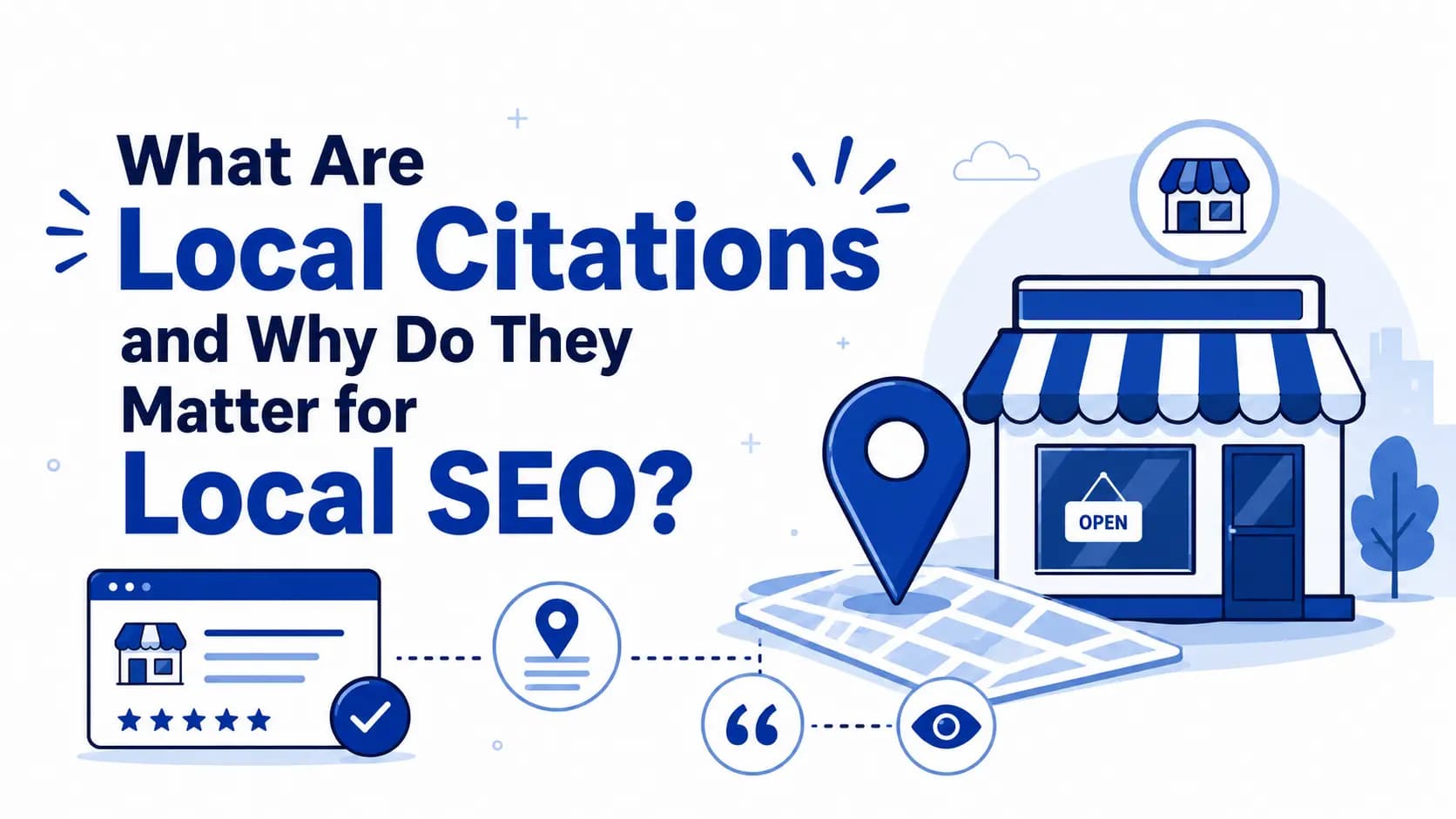
A local citation is any online mention of your business name, address, and phone number. In SEO language, that trio is called NAP. In normal business-owner language, it is the stuff customers need before they call, visit, book, or decide your competitor looks less confusing.
For a Mississauga business, local citations can appear on Google, Apple Maps, Bing Places, Yelp, Yellow Pages, industry directories, chamber websites, review sites, local blogs, social profiles, and even news mentions.
Some citations include a full profile with hours, photos, services, reviews, and website links. Others are simple mentions. Both can help, as long as the information is correct.
Here is the funny part. Citations look boring. They are not flashy. They do not dance. They do not have a tiny mascot holding a megaphone.
But when they are accurate, they quietly help search engines and customers confirm that your business is real, active, and safe to contact.
And when they are wrong?
That is when the citation goblin enters the room. One old phone number, one missing suite number, or one listing from 2018 can send customers to the wrong place. Not ideal, unless your business strategy is “confuse people and hope for vibes.”
Local search is not a small side quest anymore. SOCi’s 2024 Consumer Behavior Index found that 80% of U.S. consumers search online for local businesses at least weekly, and 32% search daily. That behaviour matters in Canada too because the habit is the same: people check before they call, visit, buy, or book.
Google also says local results are mainly based on relevance, distance, and prominence. Citations support the prominence part by giving Google more signals about where your business exists online. They also support relevance when your listings describe your services clearly and consistently.
This is why nap citations matter. Google wants accurate business information. Customers want accurate business information. AI answer engines want accurate business information. Everybody wants accuracy. Even your tired receptionist wants accuracy because wrong calls are not a hobby.
Citations can help with:
A structured citation is a formal business listing. Think Google Business Profile, Apple Business Connect, Bing Places, Yelp, Yellow Pages, BBB, industry directories, and local business directories. These usually have fields for your name, address, phone, website, hours, services, photos, and categories.
An unstructured citation is a mention inside normal content. This could be a local news article, sponsor page, podcast note, event listing, supplier page, blog post, or community feature. It may not look like a directory listing, but it still confirms that your business exists in a real place, serving real people.
The best local SEO strategy uses both. Structured citations build the foundation. Unstructured citations add local proof. Together, they say: “Yes, this business is alive. No, it did not vanish into the internet fog.”
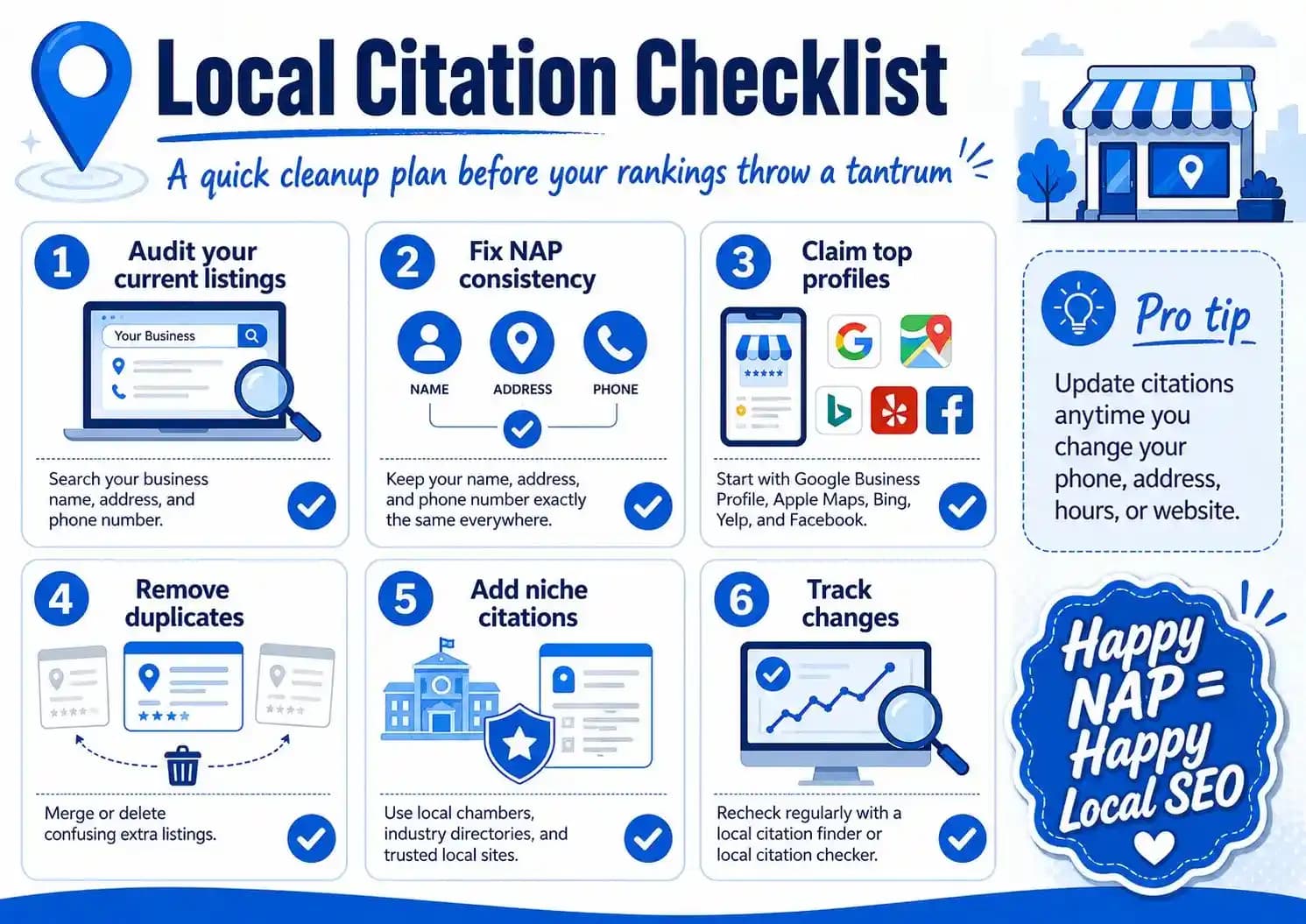
Citation building should feel like organised filing, not a panic attack with tabs open. Start with a clean system and move in order.
A local citation finder helps you find places where your business is listed, where competitors are listed, and where you may be missing. A local citation checker helps you spot errors like duplicate listings, old addresses, inconsistent names, or mismatched phone numbers.
Use these tools to answer four questions:
Do not chase every directory like a squirrel after espresso. Focus on quality. A small set of relevant, accurate, trusted citations is better than 200 dusty listings on websites nobody visits.
Here is the section many citation guides still treat like a footnote: AI search. Tools that answer local questions may look across websites, directories, reviews, maps, and public mentions. If your business facts are inconsistent, AI systems can repeat the wrong version with full confidence. That is not helpful. It is just a robot wearing a confident hat.
For AI citation readiness, make sure your business facts match across:
Also add a short “business facts” block on your website. Include your official name, service area, address, phone, email, hours, services, and links to important profiles. This gives search engines and answer engines one clean source to confirm.
Mississauga is not one simple search market. A customer in Port Credit may search differently from someone near Square One, Streetsville, Cooksville, or Erin Mills. That is why local search citations should support both city-wide and neighbourhood-level visibility.
Wide Ripples Digital says its plans use local insights, clear reporting, and goals that make sense for the Mississauga market. The site also highlights 4.8 stars out of 5,138 reviews, plus client comments about Google Business listing optimisation, clear reports, improved conversions, and better visibility.
That local context matters. Citations are not just about filling forms. They are about making your business easier to verify, easier to trust, and easier to choose when someone nearby is ready to act.
Local citations are the digital version of giving customers the right address, phone number, and confidence to choose you. They may not feel glamorous, but they keep your local SEO foundation steady.
For Mississauga businesses, the goal is simple: be accurate everywhere, be visible where customers compare, and be easy to trust when it matters. Fix the NAP. Claim the profiles. Remove the duplicates. Keep a schedule. Then let your competitors wonder why your local presence looks so annoyingly tidy.
Yes. They support business accuracy, customer trust, local relevance, and prominence signals. They are not the only ranking factor, but they help strengthen the foundation.
A citation is a mention of your business details. A backlink is a clickable link to your website. Some citations include backlinks, but the main purpose is accurate business information.
There is no magic number. Start with core platforms, then add industry-specific and local sources. Quality, relevance, and accuracy matter more than volume.
Yes, as much as possible. Use one official version of your business name, address, phone, website, and hours across key listings.
Yes. A checker can find incorrect or missing listings. The harder part is deciding which sources matter and fixing duplicate or locked profiles.
Update your website first, then Google Business Profile, then major directories, then niche and local listings. Keep a tracking sheet so nothing gets missed.
Get a free SEO audit and a clear, prioritized plan for your Mississauga business — no long-term contract required.
Get a Free SEO Audit· 8 min read
See what an HTTP 401 error means, how it differs from 403 and how users or developers can fix authentication problems. Check the steps now.
Read article· 11 min read
Improve brand mentions in ChatGPT, Gemini and AI Overviews with stronger entities, citations and answer-ready content. Use the 2026 checklist.
Read article· 14 min read
Build a keyword plan around search intent, competition and business value, then map terms to the right pages. Follow the step-by-step process.
Read article