Technical SEO
· 8 min read
HTTP 401 Error: Meaning, Causes & Fixes
See what an HTTP 401 error means, how it differs from 403 and how users or developers can fix authentication problems. Check the steps now.
Read article
Build unique location pages with local proof, services, directions, reviews and schema without creating thin doorway content. Use the framework.
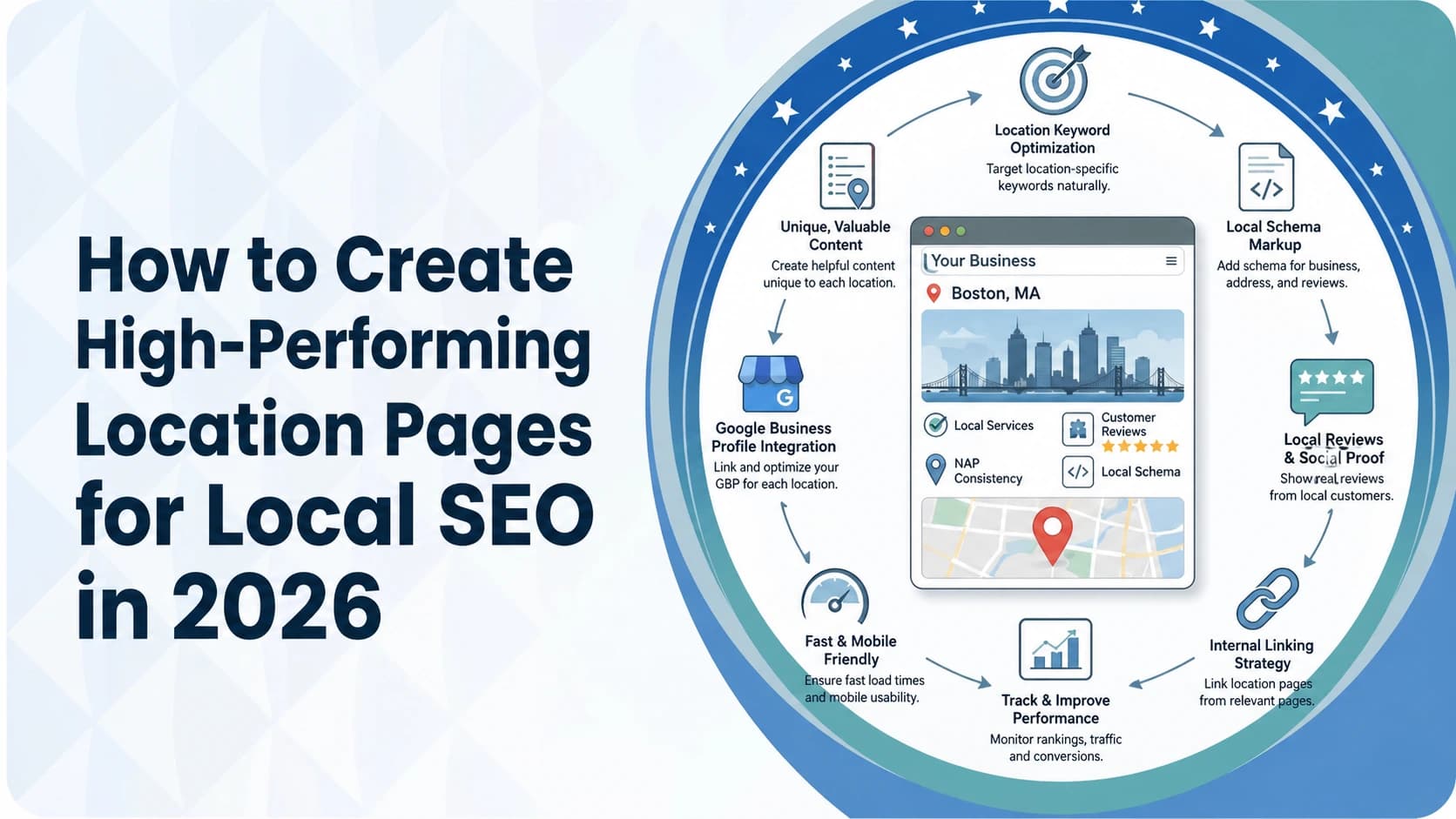
Local search has changed dramatically since early in the decade. Search engines now integrate AI‑generated overviews, generative results, and personalized recommendations. Studies show that 88 percent of location‑based mobile searches lead to an offline purchase within 24 hours. In 2026, businesses that operate in multiple cities or service areas need dedicated location pages to win those local queries, general “service areas” pages or cookie‑cutter paragraphs will not cut it anymore.
Below is a step‑by‑step framework for creating location pages that rank highly, convert visitors into customers and prepare your business for the future of local search.
A location page (sometimes called a local landing page) is a web page that gives detailed information about a specific physical location of your business. According to BrightLocal, location pages help customers find the nearest branch and give search engines enough information to index and rank the page for “near me” and “city + industry” searches.
BrightLocal stresses that the majority (40‑60 %) of the page content should be unique to that location. Location pages differ from geo pages (service‑area pages) because they are tied to a real address, whereas geo pages cover a service area without a physical office. Geo pages can become doorway pages if created in bulk with thin content. High‑performing location pages provide:
Before creating any page, identify the queries your local customers use. Backlinko recommends scanning the SERPs and your Google Business Profile (GBP) to find popular keywords and questions. Look at the “People also ask” boxes and the keywords used in competitor GBPs. Use a keyword research tool (e.g., Semrush or an AI‑powered keyword generator) to find high‑intent phrases with local modifiers (city, neighborhood, zip code, “near me”).
BrightLocal warns that copying and rephrasing content across several locations produces “diluted‑value content”. Aim for at least 40–60 % unique content per page. Include:
Boulder SEO shows how an optimized location page for “Longmont SEO company” includes tailored title tags, meta descriptions and a compelling H1 that addresses the local audience’s pain points. Follow these practices:
Schema markup is a critical technical signal. Boulder SEO calls it “the 2026 technical SEO priority”. Use LocalBusiness schema to mark up each location page with name, address, phone, hours and geo‑coordinates. Include additional attributes like “HardwareStore” or “Dentist” as appropriate. Test your markup with Google’s Rich Results testing tool.
Mat Nelson highlights adding an FAQ section with schema to capture AI overviews. Provide concise Q&A entries such as “What regulations apply to roofing projects in Escondido?” This makes it easier for generative engines to cite your page.
Backlinko explains that embedding a Google Map on your Contact or About page reinforces local signals. Copy the embed code from Google Maps and insert it near your NAP details. For service‑area businesses without a physical office, embed a map that covers the service area and add driving directions to your nearest hub.
NAP consistency remains a major ranking factor. Backlinko advises running an NAP audit across your website, GBP, directory listings and local citations to ensure your name, address and phone number are identical everywhere. Update inconsistent citations and discover new citation opportunities on local sites to reinforce relevance. Mat Nelson also emphasises NAP consistency across social media profiles.
Reviews are among the strongest local ranking signals. Boulder SEO recommends using Google’s “Ask for reviews” feature, sending direct links to customers or displaying QR codes at your location. Engage with customers and respond to reviews a key part of demonstrating E‑E‑A‑T (Experience, Expertise, Authoritativeness, Trustworthiness) and building trust. Add a testimonials section on each location page and use schema markup for reviews.
Mat Nelson proposes creating geo‑modified pages for each service area even if you don’t have a physical office. These pages target city‑specific keywords, signal relevance to search engines and highlight unique local expertise. Elements to include:
Most local searches happen on mobile devices. Ensure your pages load quickly, are fully responsive and accessible. Avoid intrusive pop‑ups and ensure fonts and buttons are easy to read and tap.
The guides above share similar tactics. To stand out in 2026, incorporate innovative elements that competitors often overlook:
High‑performing location pages in 2026 do more than list an address and phone number. They provide unique, location‑specific content, align with local search intent, use structured data and internal links, solicit genuine customer reviews and adapt to new search paradigms like AI overviews and voice search.
By following the steps outlined here, and integrating innovative elements such as virtual tours, dynamic CTAs and sustainability signals, your business can dominate local SERPs, earn citations in AI responses and, most importantly, convert local searchers into loyal customers.
Get a free SEO audit and a clear, prioritized plan for your Mississauga business — no long-term contract required.
Get a Free SEO Audit· 8 min read
See what an HTTP 401 error means, how it differs from 403 and how users or developers can fix authentication problems. Check the steps now.
Read article· 11 min read
Improve brand mentions in ChatGPT, Gemini and AI Overviews with stronger entities, citations and answer-ready content. Use the 2026 checklist.
Read article· 14 min read
Build a keyword plan around search intent, competition and business value, then map terms to the right pages. Follow the step-by-step process.
Read article