Technical SEO
· 8 min read
HTTP 401 Error: Meaning, Causes & Fixes
See what an HTTP 401 error means, how it differs from 403 and how users or developers can fix authentication problems. Check the steps now.
Read article
Identify informational, commercial, transactional and navigational intent, then choose the right page format. Use the optimization guide.
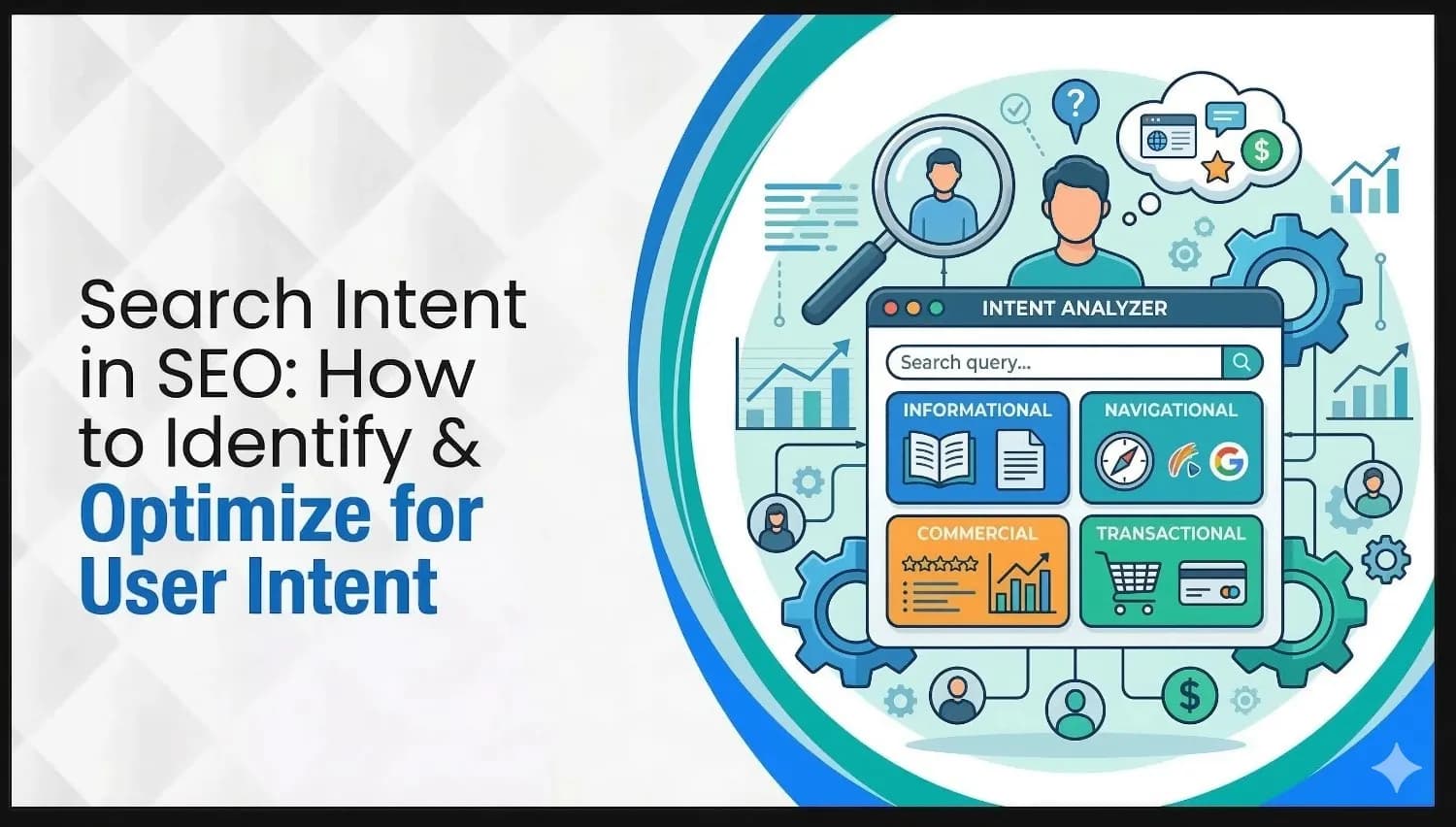
Understanding why people search and what they really want to achieve is at the heart of modern SEO. Search intent (also called user intent) refers to the goal behind a search query. Is the searcher looking for information, a specific website, a local business or to make a purchase? Search engines have become adept at interpreting this intent and prioritize pages that satisfy it. For brands and bloggers in Canada, aligning content with user intent isn't optional; it's essential to ranking, conversions and long-term visibility.
In this comprehensive guide you'll learn what search intent is, why it matters for SEO, the four main intent types, how to determine and optimize for each, and why local and mixed intents add another layer of nuance.
Search intent is the underlying purpose or goal a person has when they type a query into a search engine. Someone searching "tax filing deadline Canada 2026" likely wants up-to-date information on deadlines and forms, whereas a person searching "buy snowboard boots Calgary" intends to find a retailer. These motivations correspond to stages in the user journey, learning, comparing, deciding or taking action.
Search engines use semantics and contextual signals to understand these intentions. As one SEO resource notes, semantics helps the engine recognize synonyms, disambiguate words with multiple meanings and interpret relationships between concepts. Modern AI models and search algorithms analyze entire phrases rather than isolated keywords. This means stuffing pages with exact-match keywords no longer works; your content must answer the question behind the query.
Google's ranking systems are built around satisfying user intent. The search quality evaluator guidelines devote an entire section to identifying different intents, and Google's own documentation states that ranking systems first determine intent before returning results. In other words, you can have a page with strong backlinks and on-page optimization, but if it doesn't satisfy the user's goal, it will struggle to rank.
Matching intent benefits users and site owners:
SEO professionals often categorize search intent into four main buckets. Google's guidelines use similar categories, Know, Do, Website and Visit-in-Person, but the SEO naming convention is slightly different. Here's what each type means, how to recognize it and how to optimize accordingly.
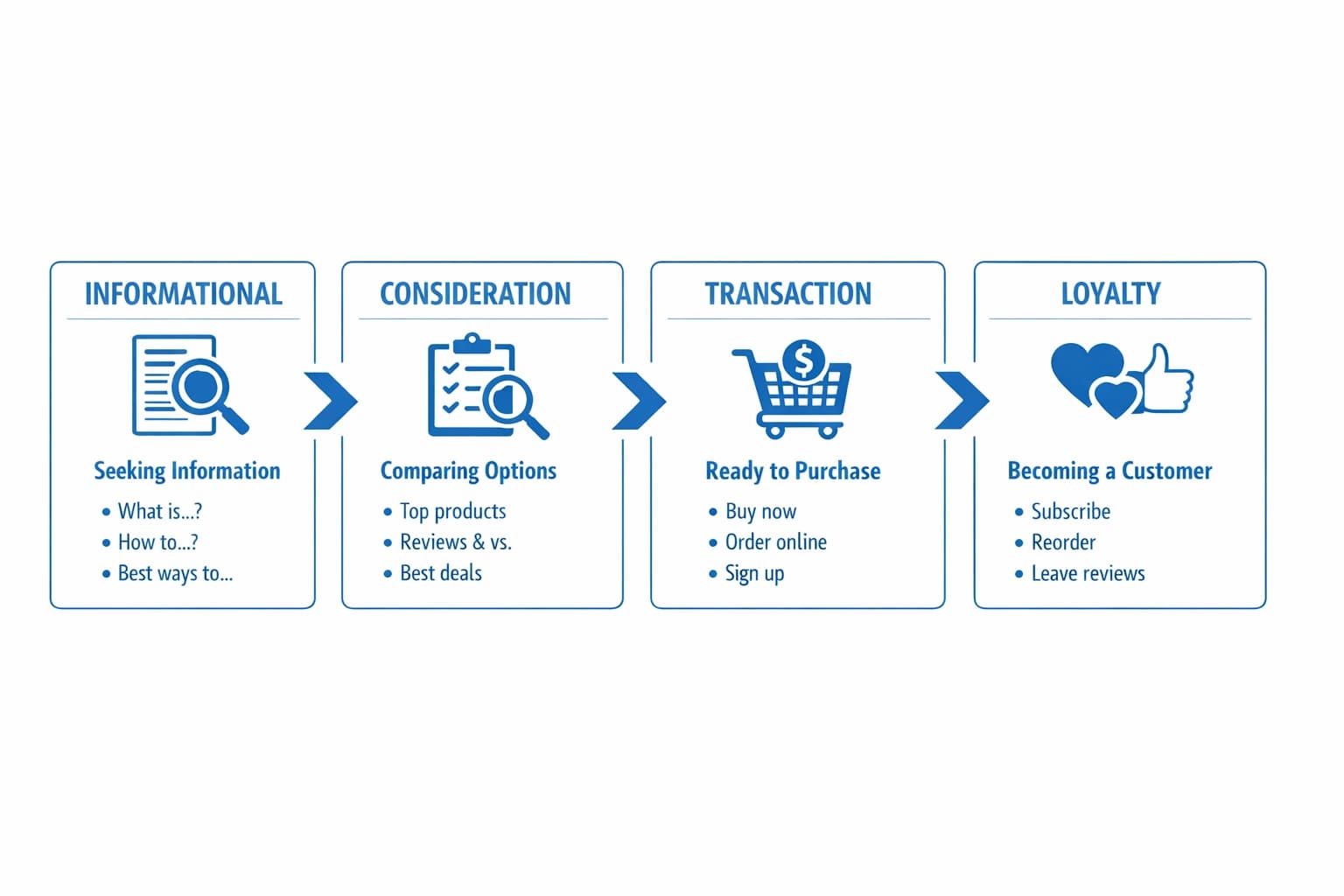
People search with informational intent when they want to learn something. Queries often include words like how to, what is, why or best way to. They might be looking for instructions, definitions, historical facts or simple explanations. Examples include:
How to optimize:
Navigational intent occurs when someone wants to reach a specific website or page. These queries often include brand names or specific product names. For instance:
How to optimize:
Note that ranking for navigational keywords that target another brand can yield low click-through rates because users typically click the official result. Focus on navigational queries where your brand is the target.
Commercial intent (sometimes called "commercial investigation") sits between learning and buying. Users are comparing products, reading reviews and looking for the best options. Searches often contain words such as best, top, review, compare or alternatives. Examples:
How to optimize:
When people are ready to take action, buy, sign up, or download, transactional intent is at play. Queries usually include words like buy, order, subscribe, download or the specific product name. Examples:
How to optimize:
Not every query fits neatly into one category. Some keywords exhibit mixed intent, a blend of informational and commercial, or commercial and transactional. For example:
To serve mixed intent:
Google's guidelines also identify visit-in-person intent: users want to find a location or business near them. For local Canadian businesses, these queries are crucial. Examples:
How to optimize for local intent:
Identifying search intent isn't guesswork; it involves analysis, research and tools. Here are practical strategies to understand what your target audience is looking for.
Google's ranking systems have already determined which pages satisfy a query. By examining the top results you can infer the dominant intent. Here's how:
For example, if the SERP for "backlink checker" is dominated by tools and software, creating a blog post explaining how backlink checkers work will not rank. Instead, you'd need to offer an actual tool or a landing page.
Certain modifiers signal intent. Long-tail keywords containing words like who, what, how, best, affordable, buy and learn often indicate informational, commercial or transactional intent. Even the order of words can change intent, for example, "dog food ingredients" suggests a searcher wants to know what ingredients are in commercial dog foods, whereas "ingredients for dog food" suggests they want homemade recipes. Use keyword research tools to find variations and pay attention to localised phrases like "near me" or "in Vancouver."
SEO platforms and browser extensions can help identify intent. Many keyword research tools label intents (informational, commercial, etc.), and some, like Semrush, display an Intent widget that shows the dominant intent and top ranking pages. Analytics can reveal what users do on your pages, high bounce rates or short session durations may signal a mismatch between page content and the searcher's intent. Use heatmaps to see which sections users engage with most and adjust your content accordingly.
Beyond SERP analysis, understanding your audience requires feedback. Look at questions from your customer support team, comments on your blog, social media interactions, and on-site surveys. A simple poll asking, "What were you hoping to find here?" can uncover mismatches in content and intent.
Once you've identified the intent behind a keyword, the next step is to tailor your content. Below are strategies that apply across intent types.
During SERP analysis, note whether top results are blog posts, product pages, videos or tools. Aligning your content format with the dominant type can improve ranking. For example, "how to save money" is dominated by listicles, so creating a listicle of money-saving tips is more likely to succeed.
Intent often has layers. A searcher looking up "how to start a vegetable garden" wants step-by-step instructions but may also appreciate tips on tools, soil preparation and pest control. Provide supplemental information without veering off into unrelated topics. Use People Also Ask questions to identify what else users want to know.
Easy-to-read content keeps users on your page and signals quality. Some best practices include:
Avoid intrusive pop-ups or heavy ads. Google dislikes pop-ups that hinder user experience.
Title tags and meta descriptions appear in search results and influence click-through rates. Keep titles under 60 characters and include your main keyword near the beginning. Write meta descriptions under 120 characters, summarizing what users will find on the page and aligning with their intent. Avoid fluff words like "discover" or "learn"; instead, directly address the benefit (e.g., "Step-by-step guide to filing taxes in Canada").
Each intent requires a different CTA:
Place CTAs after providing value, not before, to avoid disrupting the user's learning flow.
Search intent changes over time. If a page's rankings drop, revisit the content to ensure it matches current intent. A case study highlighted how revising content to align with user intent helped a previously mid-ranking article achieve a featured snippet and top position. Use content audits to identify pages with declining metrics and rework them for relevance.
Understanding search intent becomes clearer with real-world examples. The table below categorizes common queries by intent and suggests content formats.
The way people search is evolving. With generative AI tools like ChatGPT and Gemini, users phrase their needs as longer, natural prompts that combine multiple intents. Queries such as "Compare three affordable smartphones and recommend the best one for students" blend commercial investigation with transactional intent. AI assistants summarize answers, contributing to zero-click searches where users get the information they need without visiting a website.
For SEO practitioners, this shift means:
In 2026 and beyond, optimizing for search intent is not a trend, it's the foundation of effective SEO. Search engines analyze queries to understand whether users want information, a specific site, a comparison or a purchase. Content that aligns with this intent earns higher rankings, more clicks and deeper engagement.
For Canadian businesses and content creators, the stakes are high. Whether you run an e-commerce store in Vancouver, a local café in Toronto or a legal firm in Calgary, matching your content to the goals of your audience, seasonally, geographically and contextually, will help you stand out. By analyzing SERPs, studying query language, leveraging tools and listening to your customers, you can craft pages that not only rank but also serve and convert.
Ready to elevate your content? Our team specializes in creating search-intent-driven content that resonates with Canadian audiences. Contact us to discuss how we can help you dominate the SERPs and turn curious searchers into loyal customers.
They are essentially the same concept. Search intent (also called keyword intent or user intent) is the purpose behind a query. Understanding this purpose allows you to create content that satisfies the query rather than simply repeating keywords.
Start by analyzing the search results for that keyword. Identify the dominant content types, SERP features and common themes. Study the query language, words like how, best, buy or near me hint at intent. Use SEO tools with intent labels, and consider your audience's journey. For ambiguous queries, look at People Also Ask to identify subtopics.
Yes. Local search combines informational, commercial and visit-in-person intents. Queries such as "plumbers near me" have a strong local intent. Optimize by claiming your Google Business Profile, using consistent NAP information, and creating location-specific pages. Encourage customer reviews and include local keywords.
Yes, particularly when targeting mixed or layered intent. A comprehensive guide on "best electric bikes in Canada" can include definitions, buyer's guide sections and direct links to purchase. Use clear headings and an on-page table of contents so users find the information they need.
Voice queries are typically conversational and often include local or immediate needs (e.g., "Where is the nearest coffee shop?"). To rank in voice results, ensure your business information is up-to-date in local directories, provide concise answers to common questions, and structure content with natural language.
Get a free SEO audit and a clear, prioritized plan for your Mississauga business — no long-term contract required.
Get a Free SEO Audit· 8 min read
See what an HTTP 401 error means, how it differs from 403 and how users or developers can fix authentication problems. Check the steps now.
Read article· 11 min read
Improve brand mentions in ChatGPT, Gemini and AI Overviews with stronger entities, citations and answer-ready content. Use the 2026 checklist.
Read article· 14 min read
Build a keyword plan around search intent, competition and business value, then map terms to the right pages. Follow the step-by-step process.
Read article