Technical SEO
· 8 min read
HTTP 401 Error: Meaning, Causes & Fixes
See what an HTTP 401 error means, how it differs from 403 and how users or developers can fix authentication problems. Check the steps now.
Read article
See how SEO improves search visibility through content, technical fixes, links and local signals, plus how results are measured. Read the guide.
You search. I search. Everyone else searches. You type a question, hit search, skim the first page and get a quick answer. Less clicking. More scanning. More "done."
That is the 2026 shift. People still search a lot, but they click less. The results page now gives answers right away, so the "first click" is not guaranteed anymore.
If you have ever asked what is SEO and why it still matters, here is the honest answer: SEO is not only about getting onto page one. It is about being the best, clearest answer in the moment, even when users do not click.
Search also still happens mainly on Google. In January 2026, Google held about 89.82% of the worldwide search engine market share. That is why most SEO efforts still start there.
In this guide, we will start with the basics. Then we will cover what changed in 2026, how SEO works now, and what you should measure so results turn into leads and sales.
SEO stands for search engine optimization. If you want to define SEO in one sentence, use this: SEO is the work you do to help your pages appear in unpaid search results for searches that match your business. That is the definition of search engine optimization that matters in real life.
Now the part most people miss: the goal is not "more traffic." The goal is the right visitor, followed by the right action. That action might be a call, a booking, a quote request, or a purchase.
This is also what people mean when they say SEO definition marketing. In digital marketing, SEO is how you show up when someone is already looking for what you sell.
You may see odd phrases online, like SEO search optimization engine. That wording is clunky, but the intent is simple: optimization helps search engines, and people understand your pages.
The baseline in 2026 is also clear: content should be helpful, reliable, and written for people first. That is not a slogan. It is a ranking advantage when the page solves the query better than anyone else.
SEO is not a separate planet. It is part of the whole digital marketing system.
Here is how SEO supports the funnel:
This is why SEO works so well in SEO marketing. It shows up at the exact moment someone has intent.
SEO also connects with the other channels you already use:
SEO is demand capture done well. It meets people when they are already motivated.
And if you are wondering again what is SEO doing inside digital marketing, here is the short answer: it is the channel that often brings the highest-intent visitors, because they arrived with a problem they want solved.
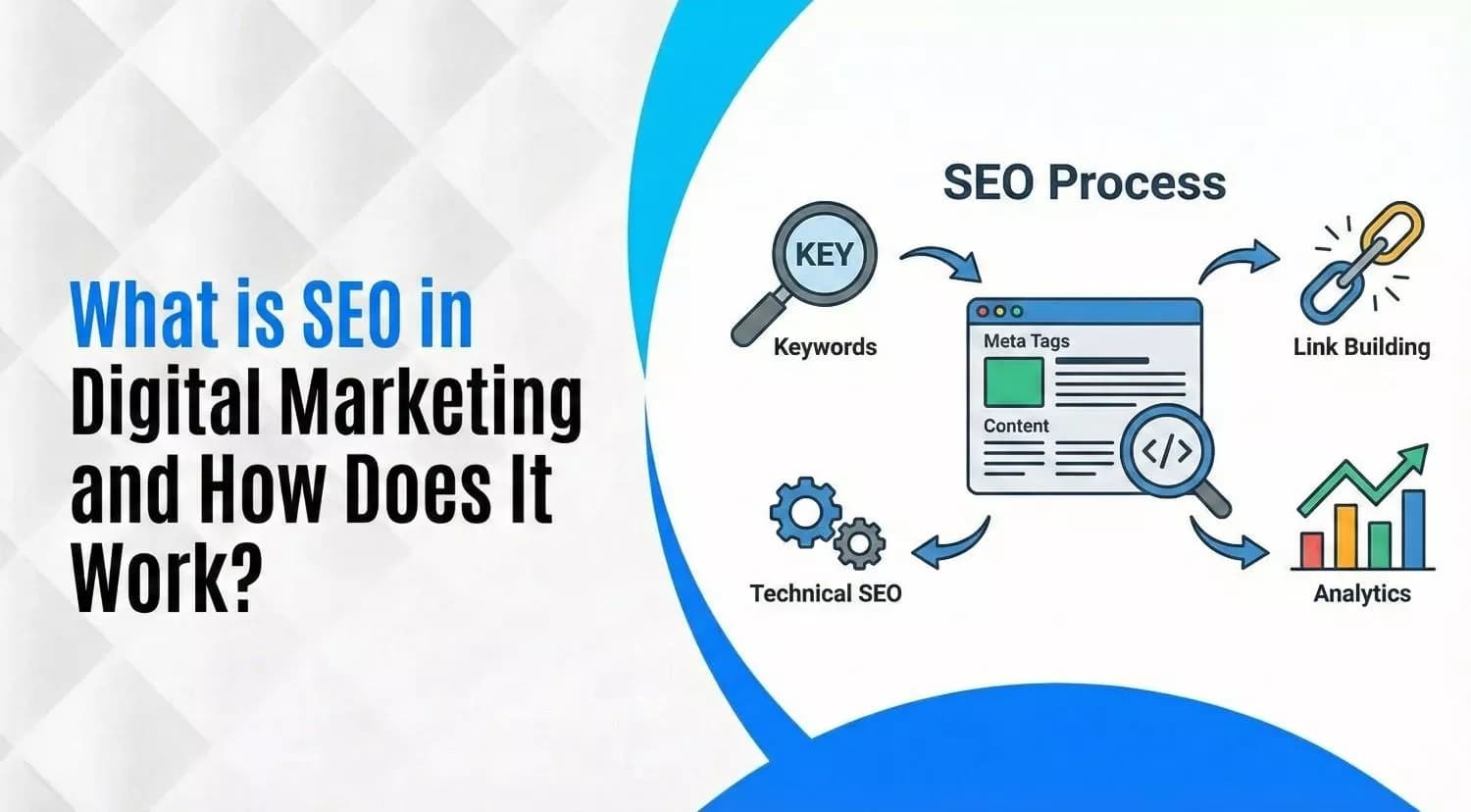
SEO follows a simple path. When you understand this path, you can spot what is blocking results.
The "classic flow" is still true in 2026. What changed is what appears on the results page and what counts as a win.
In 2026, the top of the results is not always a list of links. Google now uses AI features for many searches, including AI Overviews and AI Mode. In many cases, users can get a solid answer without leaving the page.
Google has guidance for site owners on how AI features work and how content can be used in them.
So your win is not only "rank higher." It is also "be cited and trusted." If the AI feature references your page, you get exposure even when clicks fall.
A lot of businesses panic when they see fewer clicks in the Search Console. That reaction is understandable, but it can be short-sighted.
In 2026, you can still win even when clicks drop because:
So the goal expands. You are not only chasing traffic. You are building total search visibility.
This is where reporting changes.
Microsoft introduced an "AI Performance" report in Bing Webmaster Tools that tracks when your site is cited in AI answers, including total citations and cited pages.
Even if your business focuses on Google, this is still a useful signal: search is becoming more answer-led. Measuring "presence" is becoming as important as measuring "clicks."
A practical takeaway: you should track visibility across rankings, maps, featured results, and AI answer presence, not only sessions.
People do not search with keywords. They search with goals. That is why the best starting point is intent mapping. You match a page to a goal:
Call, book, buy, compare, learn.
Then you build a "topic map" so pages do not fight each other. If two pages answer the same intent, they cannibalize rankings and confuse users. This is also the cleanest way to handle keyword variants like SEO how does it work and how does search engine optimization work. These are the same questions in different words. You do not need ten pages. You need one strong page that answers the intent fully.
In 2026, content needs to do three things well:
Trust comes from specifics, not filler. Add real examples, process details, and clear next steps. Keep it updated when facts change. If a page looks stale, users notice. AEO-friendly content also helps answer engines because it is structured, direct, and easy to pull into a summary. That does not mean you write for robots. It means you write clearly for people who want a straight answer.
On-page optimization is mostly about clarity and structure. A strong page makes it obvious:
On-page improvements that usually move the needle:
A visitor reading a guide may not be ready to buy. A smart CTA for them could be "see pricing," "check availability," or "get a quick audit", depending on the offer.
Technical SEO is the foundation. Without it, your content can be great and still underperform. Technical issues that commonly block results:
You do not need perfection. You need "no major blockers." Clean structure, fast pages, and clear internal links are usually enough to compete.
Authority is the reason a search engine believes you. Links still matter, but the goal is not quantity. It is relevant and credible. One strong mention can beat ten weak ones.
Good authority building looks like:
Avoid shortcuts. If the tactic feels sneaky, it can lead to penalties or wasted time. Sustainable SEO is not built on tricks.
If you serve a local area, local SEO can bring the fastest wins.
Local SEO focuses on:
Local results are not only about ranking. They are about trust. Reviews, photos, categories, and clear service details can be the difference between "seen" and "chosen."
If you chase gimmicks, results come and go. If you build clarity, results last longer.
To make content "answer-ready," do these things consistently:
Structured data can also help search engines understand your content. Schema is the standard vocabulary used across the web for that purpose. The goal is not to "game" AI answers. The goal is to be the most useful, clearest source so you have a chance to be referenced when answers are generated.
If you only measure rankings and traffic, you will miss what matters most. A practical measurement set has three layers:
This matters even more because many searches are now "zero-click," where users get what they need directly on the results page. Measuring visibility beyond clicks is becoming standard practice.
Also set a reporting cadence that forces action:
SEO works best when it runs like a routine, not a one-time project.
Here is a monthly loop that stays focused and avoids chaos:
If you only publish new content, you leave money on the table. Updates and improvements often deliver faster results because those pages already have history.
A few myths keep businesses stuck. Clearing them up saves months.
If you want progress quickly, start here:
Also, do not forget accessibility. It helps real users and it reduces friction. The WCAG standards are a trusted reference point for improving accessibility.
If you take one idea from this guide, take this: SEO in 2026 is not only about rankings. It is about becoming the best answer, building trust at a glance, and making it easy for people to take the next step.
If you want help turning these ideas into calls and booked consultations, Local SEO Mississauga is a solid place to start. They focus on practical, clean SEO work that builds long-term visibility without risky shortcuts. They also keep the work tied to outcomes, not vanity metrics, so you can see what is working and why.
Small improvements can show movement in weeks. Strong, consistent results usually take a few months, depending on competition and site health.
No. SEO is changing. Visibility, trust, and being referenced are becoming more important, not less.
Paid search buys immediate visibility. SEO earns visibility over time. Many businesses use both: ads for speed, SEO for stability.
Fix the basics: one strong service page, a clean local presence, fast mobile pages, and a simple content plan that answers customer questions.
Get a free SEO audit and a clear, prioritized plan for your Mississauga business — no long-term contract required.
Get a Free SEO Audit· 8 min read
See what an HTTP 401 error means, how it differs from 403 and how users or developers can fix authentication problems. Check the steps now.
Read article· 11 min read
Improve brand mentions in ChatGPT, Gemini and AI Overviews with stronger entities, citations and answer-ready content. Use the 2026 checklist.
Read article· 14 min read
Build a keyword plan around search intent, competition and business value, then map terms to the right pages. Follow the step-by-step process.
Read article