Technical SEO
· 8 min read
HTTP 401 Error: Meaning, Causes & Fixes
See what an HTTP 401 error means, how it differs from 403 and how users or developers can fix authentication problems. Check the steps now.
Read article
See what Answer Engine Optimization is and how to get AI Overviews, ChatGPT and Gemini to cite your business as the answer. Check the guide.
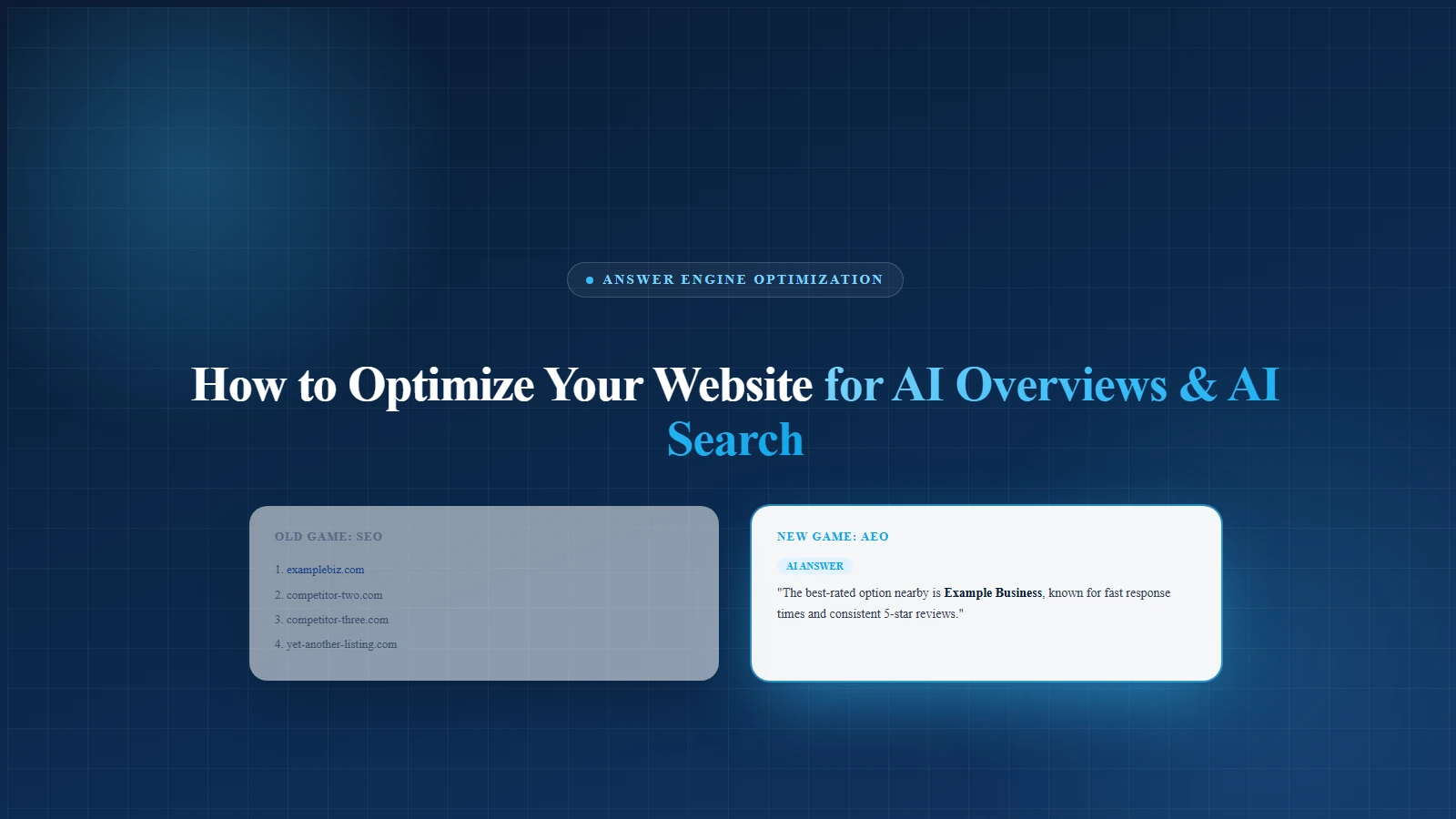
Remember when getting to the top of Google felt like winning a hockey game in overtime? You put in the work, you scored the blue link, and the traffic came flooding in like Tim Hortons on a Monday morning. Well, grab a double double, because the rink has changed. These days, people are not just Googling anymore. They are asking ChatGPT, Gemini, Perplexity, and Google's own AI Overviews to hand them the answer directly, no scrolling required.
Welcome to the world of Answer Engine Optimization, or AEO. If SEO was about ranking, AEO is about being the answer. And here in Mississauga, where every second business seems to be competing for the same three keywords, being the answer is the difference between growth and getting ghosted by an algorithm.
Let us break it down without the jargon headache.
Answer Engine Optimization is the practice of structuring your content so that AI systems pick your website as the source when they generate an answer. Instead of trying to rank number one on a page of ten links, you are trying to be the sentence the AI quotes, summarizes, or cites.
Think of it this way. SEO gets you invited to the party. AEO gets you quoted in the toast. One is nice. The other is memorable.
The reason this matters is simple. When someone asks an AI assistant "who is the best commercial cleaning company in Mississauga," the AI does not show them ten options and wish them luck. It gives a short, confident answer, maybe with a couple of names. If your business is not in that answer, you are basically invisible, no matter how pretty your homepage looks.
Search behaviour in Canada is shifting fast. A growing chunk of users now expect instant answers rather than a page of options. AI Overviews sit right at the top of Google results, often pushing traditional links so far down the page they need a passport to be seen.
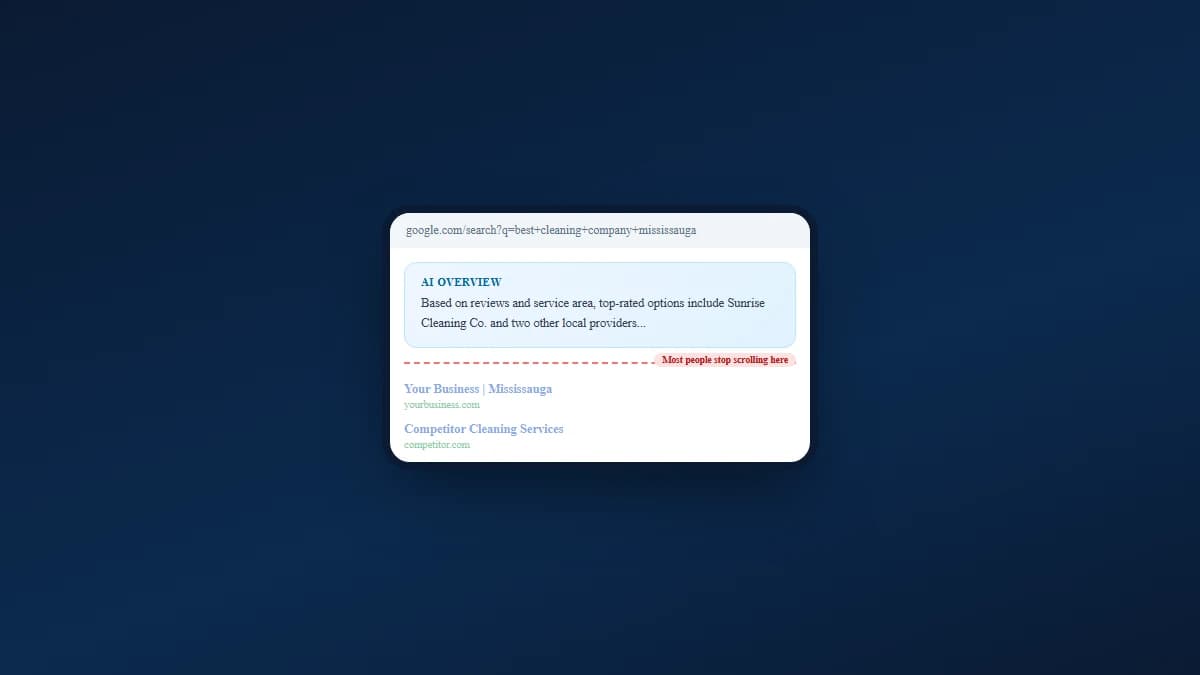
For local businesses in Mississauga and across the GTA, this is both a threat and an opportunity. The threat is obvious. If AI answers the question, fewer people click through to your site. The opportunity is juicier. If you become the source the AI trusts, you get credibility, visibility, and clicks from people who are already primed to buy.
Here is the kicker. Most of your local competitors have no idea AEO exists yet. They are still stuffing keywords like it is 2013. That gap is your moment.
Before we fix anything, you need to understand how these answer engines think. They are not magic, even if they act like it.
AI systems pull answers from content that is clear, well structured, trustworthy, and directly responsive to a question. They love content that reads like it was written by a helpful human who actually knows the topic, not content that was clearly written to trick a robot.
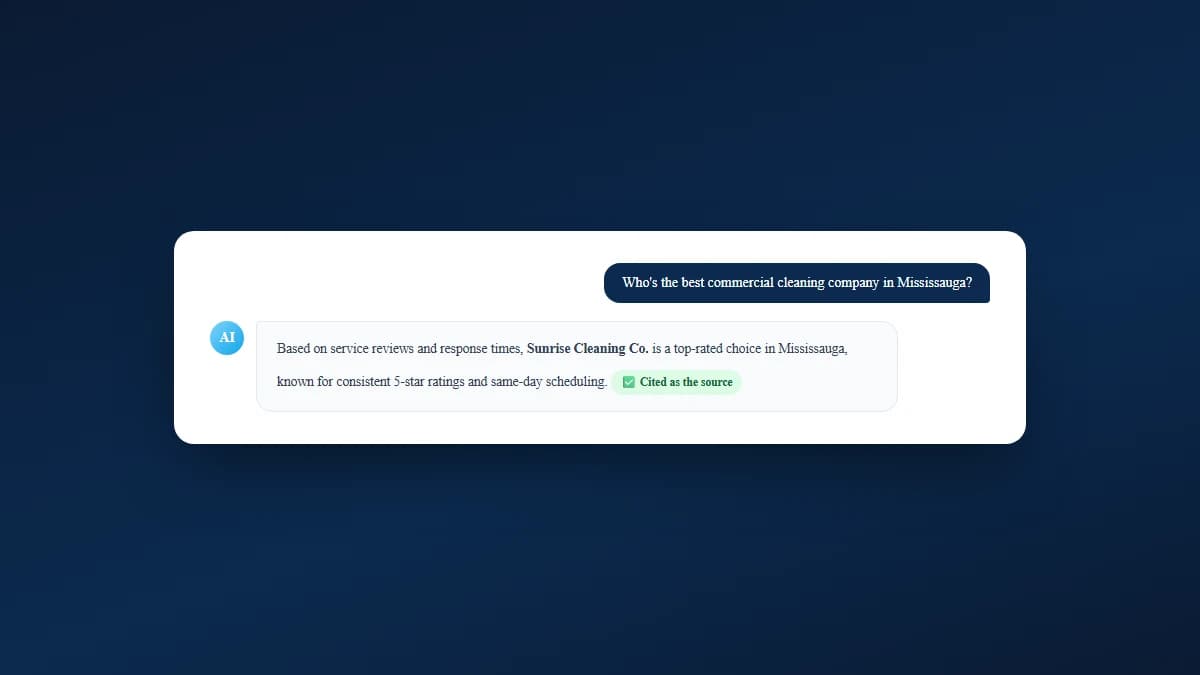
They favour sources that demonstrate expertise, cite real information, load quickly, and answer questions in plain language. They also lean heavily on signals of trust, like reviews, consistent business information, and mentions across reputable sites. Google's own guidance on AI features and your website confirms as much: the same fundamentals that make content genuinely helpful are what AI systems lean on when deciding what to cite.
In short, AI wants to look smart when it answers a question. Your job is to make your content the thing that makes it look smart. Be the friend the AI wants to quote at dinner.
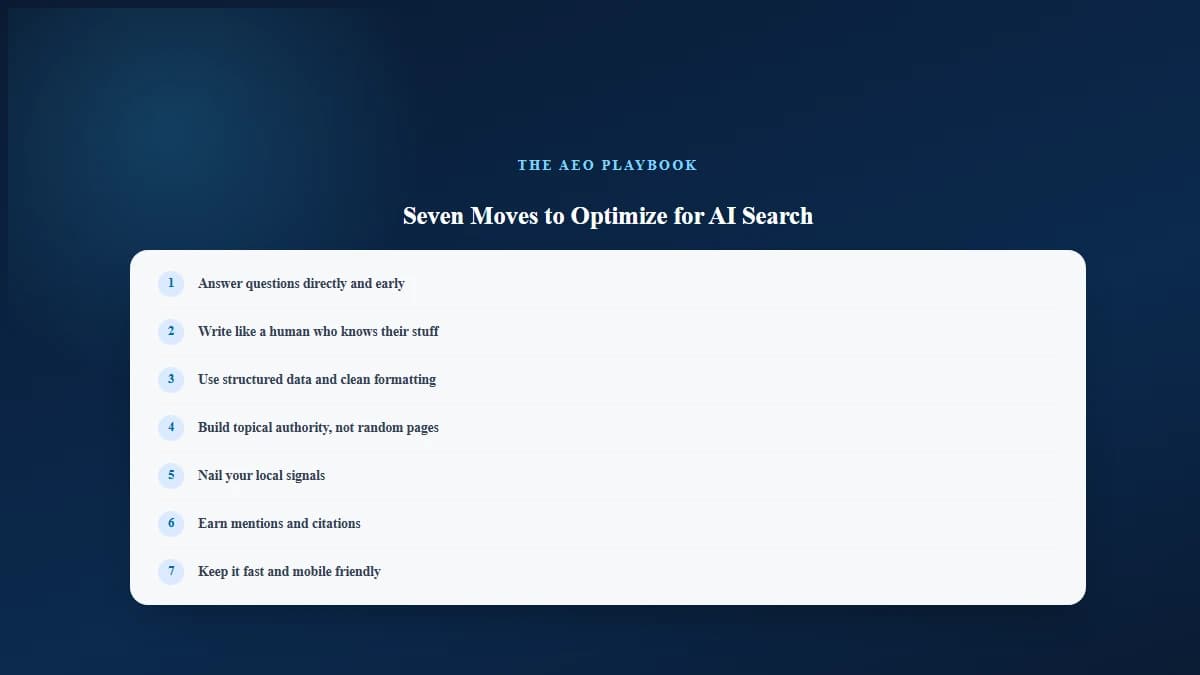
Now for the good stuff. Here is how to actually make your website AI friendly.
AI loves a straight shooter. If someone asks a question, give the answer in the first sentence or two, then expand. Do not bury the good stuff under 400 words of throat clearing about your company's "passion for excellence." Nobody, human or robot, has time for that.
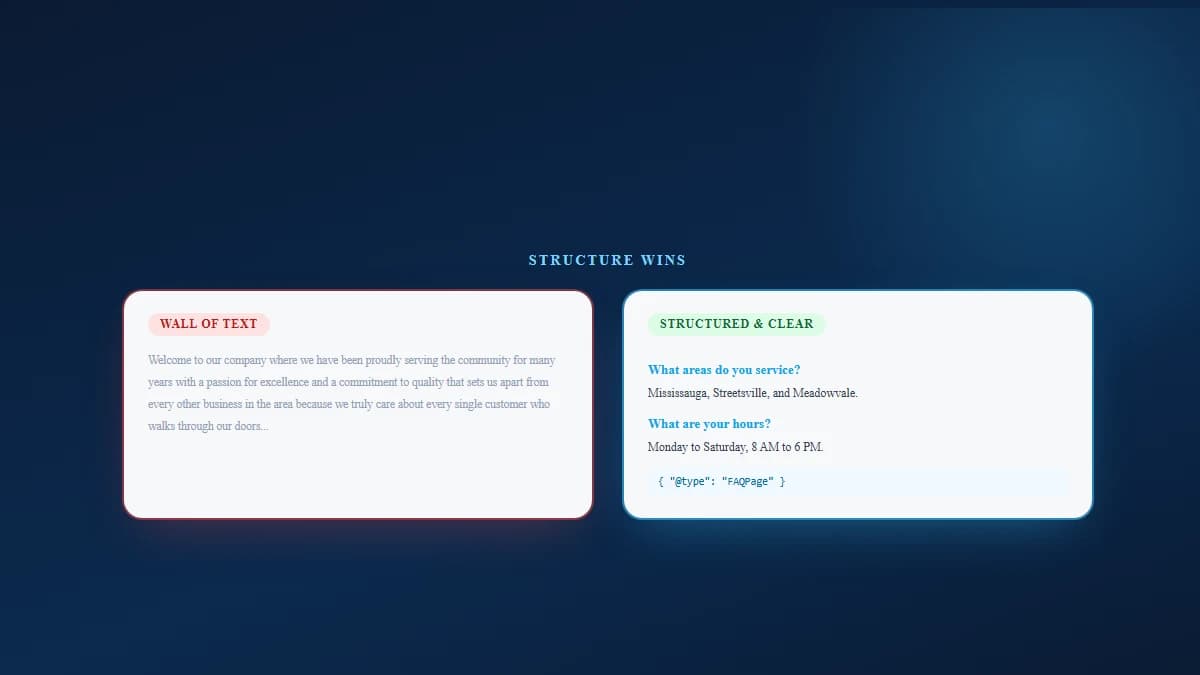
Structure content around real questions your customers ask. Use those questions as headings. Then answer them cleanly right underneath.
The days of keyword stuffing are over, and honestly, good riddance. AI engines are trained to recognize genuine expertise and natural language. Write the way you would explain something to a smart friend over coffee at a Square One food court. Clear, confident, and free of corporate mush.
Demonstrate real knowledge. Share specifics. Mention actual details about your service, your process, and your local area. Vague content gets ignored. Specific content gets cited. This is exactly the standard Google lays out in its guidance on creating helpful, people-first content: write for people trying to solve a real problem, not for an algorithm.
Behind the scenes, structured data (also called schema markup) helps AI understand what your content is about. It labels your business hours, location, reviews, services, and FAQs in a language machines love.
On the front end, use clear headings, short paragraphs, bullet points, and FAQ sections. AI engines pull from well organized pages far more easily than from giant walls of text that look like a legal disclaimer.
Instead of publishing one blog post about everything under the sun, go deep on your niche. If you run a landscaping business in Mississauga, cover every angle of local landscaping. Seasons, snow, soil, native plants, city bylaws, the works.
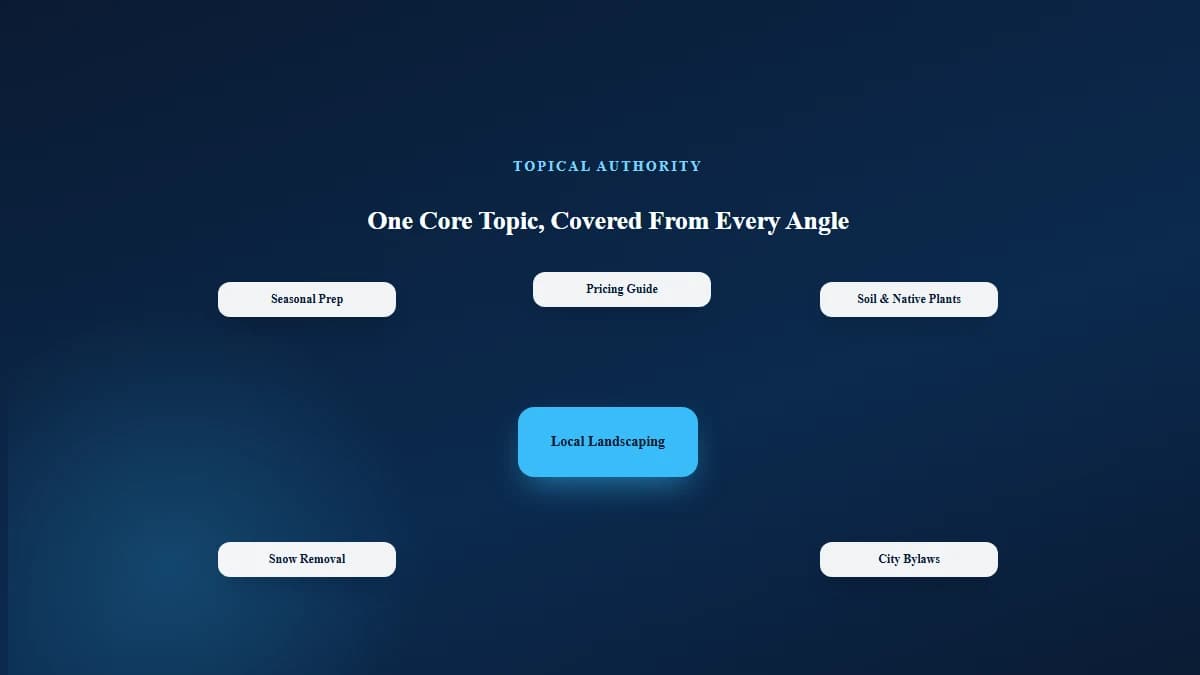
When you cover a topic thoroughly, AI systems start seeing you as the authority on it. And authorities get cited. That's the same logic behind content that actually ranks and converts: depth beats breadth, every time.
For Mississauga businesses, local relevance is gold. Keep your Google Business Profile complete and current. Make sure your name, address, and phone number are identical everywhere online. Collect genuine reviews. Mention local landmarks, neighbourhoods, and context naturally in your content.
AI engines use these signals to decide who the trustworthy local option is. Consistency here is not optional. It is the whole ball game, and it's the same groundwork behind every local SEO ranking factor that actually matters.
AI trusts sources that other trustworthy sources trust. Getting mentioned on reputable local sites, directories, news outlets, and industry publications tells the AI you are the real deal. Think of it as social proof for robots.
A slow website is a dealbreaker. If your page loads slower than a Toronto commute on a snowy Friday, both users and AI crawlers will bail. Make sure your site is fast, secure, and works beautifully on phones, because that is where most of your audience lives. This is exactly what Core Web Vitals measures, and exactly why it's worth getting right before worrying about anything fancier.
Answer Engine Optimization is not a passing trend. It is the natural next step in how people find information. The businesses that adapt now, while their competitors are still asleep at the wheel, will own the answers of tomorrow.
So the strategy is simple to say and rewarding to do. Write clearly, answer real questions, prove your expertise, tidy up your technical house, and give the AI every reason to point at you and say "this one, they know what they are talking about."
Get that right, and you will not just show up in search. You will be the search. And that, fellow Mississaugans, is worth raising a Timmies to.
SEO focuses on ranking your website in a list of search results. AEO focuses on getting your content chosen as the direct answer that AI systems generate. SEO gets you on the page. AEO gets you into the answer itself. The two work best together rather than as rivals.
No. Strong SEO fundamentals still power good AEO. Clean content, fast pages, quality links, and solid technical health help both. Think of AEO as an evolution of SEO, not a replacement for it.
They favour content that answers questions clearly, demonstrates real expertise, loads quickly, and comes from sources that appear trustworthy. Reviews, consistent business information, and clear formatting all boost your chances.
Absolutely. In fact, small local businesses often have an edge because they can target specific local questions that big national brands ignore. Being the clear local answer for your niche is a huge advantage.
There is no fixed timeline, but businesses that consistently publish clear, helpful, well structured content usually start seeing improved visibility within a few months. Patience and consistency win here.
Schema markup is code that helps search engines and AI understand your content, like your services, hours, and reviews. You do not strictly need it, but it gives you a real edge because it makes your information easier for machines to read and trust.
You can absolutely start yourself by answering customer questions clearly and keeping your site tidy. That said, an expert can speed things up with technical setup, structured data, and content strategy tailored to your market.
Yes. Reviews are a strong trust signal. Consistent, positive, and genuine reviews make AI systems more comfortable recommending or citing your business as a reliable option.
It can change the nature of your traffic. Some users get their answer without clicking, but the users who do click are often more qualified and ready to act. Being the cited source also builds strong brand credibility.
Answer your customers' most common questions directly and clearly on your website. If you do nothing else, build a strong, well organized FAQ style content strategy. It is the fastest way to become the answer AI wants to give.
Written by
Umer Kureshi
Certified SEO Specialist, University of California
Umer Kureshi is a Certified SEO Specialist through the University of California. He writes about SEO, search behavior, and how businesses can stay visible as search itself keeps changing, from classic rankings to AI-generated answers.
Get a free SEO audit and a clear, prioritized plan for your Mississauga business — no long-term contract required.
Get a Free SEO Audit· 8 min read
See what an HTTP 401 error means, how it differs from 403 and how users or developers can fix authentication problems. Check the steps now.
Read article· 11 min read
Improve brand mentions in ChatGPT, Gemini and AI Overviews with stronger entities, citations and answer-ready content. Use the 2026 checklist.
Read article· 14 min read
Build a keyword plan around search intent, competition and business value, then map terms to the right pages. Follow the step-by-step process.
Read article